Sensory Overload in Motherhood: A Neuro-Affirming Guide

Why you’re feeling overstimulated as a mum
If you've ever locked yourself in the bathroom so you could just stop being touched for thirty seconds, or flinched at the sound of your own baby crying, not because you don't love them, but because your nervous system has nothing left to give, you will want to keep on reading. I wrote this for you. The constant noise, the smell of milk, the feeling of small hands always reaching for you. When you're an ADHD or autistic mum, sensory overload in motherhood isn't just "feeling a bit overwhelmed." It's your whole body telling you it has hit capacity, and nobody seems to understand why it's so much harder for you than it appears to be for everyone else.
Physical Symptoms of Being Touched Out
You recoil and feel irritated or annoyed when touched
Muscle tension or pain, like in your neck and shoulders, without any apparent reason
You wake up tired, even though you have slept, you feel like you’re just dragging yourself
You have trouble falling asleep even though you try, or you wake up in the middle of the night, and you are incapable of going back to sleep
Emotional and Mental Signs of Being touched out
You feel emotionally drained or numb, like you are living on autopilot
You feel on edge about every aspect of parenting, causing you anxiety
You feel like you're having even more trouble focusing or making choices, which is already an issue for those with ADHD
Feeling alone even when you are with your partner and kids
You fantasise about running away
Your sensory input is becoming hard to manage; you can’t handle loud noises, bright lights, or intense smells
The Science Behind Maternal Overstimulation and "Touched Out" Motherhood
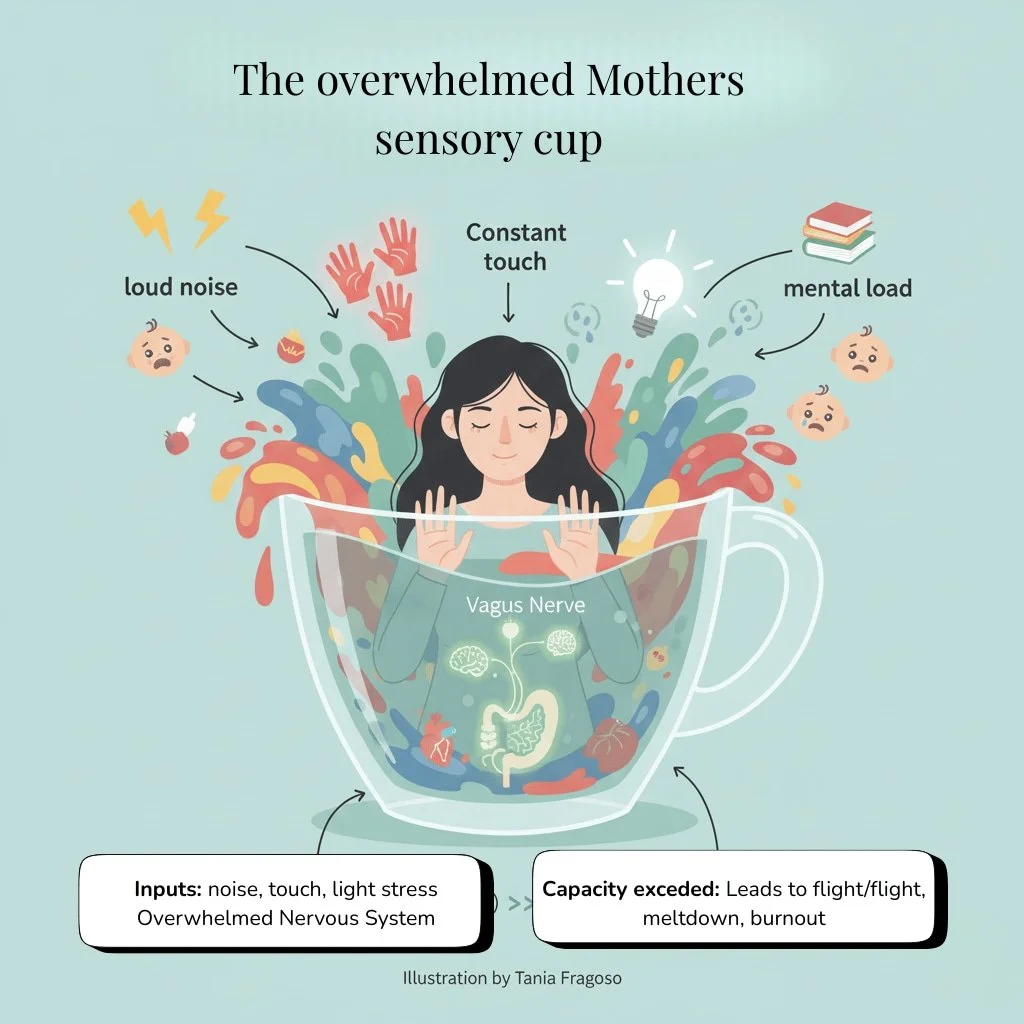
Your body and mind are designed to respond to your infant, but when the mental load combines with constant physical touch, your nervous system can enter a "fight or flight" state. This sensory experience is even more intense for those with sensory processing sensitivity, ADHD and Autism, Research published in the Journal of Autism and Developmental Disorders confirms that autistic mothers report significantly higher sensory sensitivity than neurotypical mothers across pregnancy, birth, and the postpartum period. Understanding that your symptoms of overstimulation are a physiological response, not a lack of love, is the first step toward self-compassion.
In my own personal postpartum experience after the traumatic birth of my twins, and unknowingly being AuDHD, I struggled with this same thing, for me it showed up as the need to try and control all the factors around me, making the house always tidy, sticking to strict routines for my daughters, never stopping, afraid of the constant inner turmoil and overwhelm that I felt, struggling with overstimulation and unable to find any emotional regulation. No one knew how much I was struggling internally. I looked like a super mum, dealing with twins that seemed to have all the things, like colics, bad sleeping and so on.
In my practice, I hear other versions of my story, new mothers share, with a sense of guilt and shame, that they love their baby. Still, they just feel like they can’t cope anymore; they feel overwhelmed, and the comparison that is always looming, intensifies these feelings even more. They are either comparing themselves to a member of their family, a friend or what social media portrays.
And so, the shame spiral begins. Wanting some time alone, then having that time alone and feeling the guilt for having it.
Another very common experience that I hear time and time again is those mums who simply cannot afford, either because they don’t have a support system nearby, or they are already so economically stretched that they can’t also afford to hire that support. So they soldier on and do what they can, then at night, instead of sleeping to try and recover some energy for the following day, they stay up late at night, doom scrolling, watching a series, doing whatever they never have time during the day. What they don’t realise is that this is a form of self-sabotage. The lack of sleep eventually feeds into the emotional dysregulation, intensifying the sensation of feeling touched out, overwhelmed and ashamed.
The culture of pushing harder and just pushing through the discomfort makes it harder for many new mothers to seek help. For ADHD and autistic mums, this is often compounded by rejection sensitivity — the fear that asking for help confirms you're failing. And while it is important to know that this is a phase and soon your baby will grow, and things will become easier, we need to incorporate some strategies to downregulate, because when your nervous system keeps living in a state of fight or flight for prolonged periods, this can develop into panic attacks, burnout, anxiety disorder or postpartum depression. A recent scoping review in PMC found that current postpartum supports are designed from a neurotypical perspective and often fail to meet the sensory and emotional needs of neurodivergent mothers — leading to increased masking, anxiety, and burnout.
Coping Strategies for Immediate Relief: Sensory Reset Tools
When it feels like too much, you need strategies for overstimulated moments and to reset your nervous system.
The 5-4-3-2-1 Grounding Technique: Take a moment to notice: What are five things you can see and four things you can touch, three things you can hear, what are two things that you can smell, and what is one thing that you can taste, to come back to the present moment
The cold reset. Hold a cold cloth or cold water bottle to your neck or cheeks while feeding or rocking your baby. This helps interrupt the stress response and allows for some positive sensory stimulation, to help bring your body back to calm
Find a minute to do some box breathing. Inhale for 4, hold for 4, exhale for 4. You can do this while your baby is latched, bottle feeding or resting on your chest
No time to meditate, try this instead: slow rocking while focusing on your breath, gentle stretching while baby is on the mat, walking laps while baby is in the pushchair, soft swaying or humming while holding your baby
Reduce overstimulation: Use noise-cancelling headphones during high-stress times or take a short walk to change your environment.
Set Boundaries: It is okay to ask for help from family and friends for practical support so you can have a quiet time each day.
Create a safe space for when you’re overstimulated, chaos and clutter play havoc on an already overstimulated nervous system, fueling the feelings of overwhelm. Create a little corner where the lighting is soft, the smells are pleasant so that you can practice some deep breathing, and you have your favourite stimming tools
Be mindful of your clothing when feeding your baby, think comfortable and soft to the touch clothing, hair up so that your baby can’t pull on it, a weighted bean shoulder pad that you can warm up to distract you from the uncomfortable stimulation, and help you with the shoulder tension
Use an aromatherapy roll-on and add it to your wrists so you can easily have access and take a deep breath when needed
Neuro-Affirming Support in Málaga and Online
The Maternal Mental Health Alliance has called for ADHD screening to be included in perinatal mental health assessments, recognising that neurodivergent mothers are at higher risk and less likely to receive appropriate care. Don’t wait to seek out professional help if you are struggling with stress and overwhelm. You deserve a calm nervous system, you and your baby that thrive through motherhood, and you deserve better postpartum support.
In my practice as a perinatal counsellor, I help you move beyond generic self-care on your journey of becoming a mum. Whether you are dealing with postpartum anxiety or simply struggling with the challenges of motherhood, we work together to help regulate your nervous system through a trauma-informed lens, so you can regain a sense of calm and confidence.
Frequently Asked Questions
Why does sensory overload feel worse for ADHD and autistic mums?
ADHD and autism both affect how the brain processes sensory input. When you add sleep deprivation, the physical demands of breastfeeding, and the unpredictability of a newborn, your nervous system reaches capacity faster than a neurotypical brain would. Acknowledging that this is a neurological difference in how much input your system can manage before it shuts down removes the feelings of shame and guilt that many neurodivergent mothers carry with them.
Is feeling "touched out" a sign of postnatal depression?
Not necessarily. Feeling touched out is a sensory response, not an emotional one; your body is telling you it has had too much physical input. However, if it's persistent, combined with emotional numbness or withdrawal, or accompanied by anxiety or intrusive thoughts, it's worth speaking to a professional who understands the neurodivergent layer. Sometimes sensory overload and postnatal depression overlap, and untangling them requires specialist support.
How do I explain sensory overload to my partner?
Try framing it in terms they can feel: "Imagine the most irritating sound you know, playing on repeat, while someone keeps tapping your shoulder and asking you questions, and you haven't slept properly in weeks. That's what normal household noise can feel like for me right now." Most partners want to help but don't understand the physical intensity of what you're experiencing. Being specific about what helps, silence, not being touched for twenty minutes, taking over bedtime, gives them something concrete to do.
When should I seek professional support for sensory overload?
If your coping strategies are no longer working, if you're withdrawing from your baby or partner to manage the overwhelm, or if you notice signs of burnout that go beyond ordinary tiredness, it's time to reach out. A neuro-affirming counsellor can help you understand what's driving the overload and build a plan that works with your nervous system, not against it.